![[S|C]](/assets/logo.png)
Statement
“To see a World in a Grain of Sand
And a Heaven in a Wild Flower
Hold Infinity in the palm of your hand
And Eternity in an hour
He who binds to himself a joy
Does the winged life destroy
But he who kisses the joy as it flies
Lives in eternity’s sun rise”
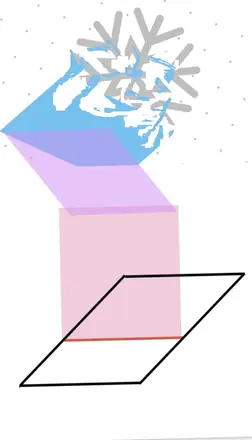
“At the limit, reality becomes denser” (E. Trías). The borderland and the philosophy of the limit as a way of seeing the world. The border and the limit as the place from which to rethink and reinvent the world and life. “To conceive of the border as a space of inevitable tension (aesthetic and political), and at the same time as the only possible sphere of active intercultural construction and of processing and transmitting new information, implies a change in the way we see the world; it means not identifying the limit with the concrete wall that floods the West Bank, or with the fences of shame on the Rio Grande or in Ceuta and Melilla, nor with the antechamber to the ‘desert of the Tartars’. It implies a mild rebellion against our cognitive authorities and, at the same time, a faint hope for a world governed by understanding and solidarity with the other. This approach opens a new horizon of reflection, one that departs from modern thought (border/wall/negativity) but also from postmodern thought, since it is not a matter of relativising the existence of the border or denying its (meta)narratives, but of establishing its ontological and semiotic status and, more importantly, of experiencing it. To inhabit the limit (limes) is a whole declaration of intent.” (L. Gómez Pérez – El Espacio Fronterizo)
“What if that limit can legitimately be conceived as a territory or strip of an AFFIRMATIVE and POSITIVE nature, proven by its hermeneutic character, by the power it offers to SAYING in terms of connection or link — of communication as well as differentiation — between what happens here, in the sphere where one speaks and responds, or holds a dialogue, and that sphere (closed in on itself) in which only referents of silence can be perceived?” (E. Trías – Filosofía del Límite)
Starting from the liminal gaze of the border walker, walking first political and linguistic borders, among others, my artistic exploration went deeper into the strata of the limit, of the interstice, of the crack, of the fissure (through which, as Jordi Soler says, light and darkness seep in…); my search then turned to the processes by which matter dissipates, and to the resistant and resilient forms and forces that, if they do not prevent its disappearance, at least slow it down; and I observe and imagine that dissipation right at its limit, where the edge effect occurs and reality, by being a borderland, becomes denser; I dwell on the bonds and the nodes that make up this dance of reality, Dissipation/Cohesion; the border walker is amazed to see that this dance takes on forms and patterns common to everything that exists, the smallest and the largest (as above, so below – H. Trismegistus), revealing that everything is in everything (Alchemical Principle); then the Rhizome and the Fractal emerge as forms that sustain a kind of cartography, an imaginary map of the cycle of life, death and rebirth (Eros/Thanatos). I explore, I travel through, I imagine this eternal movement, imagining this cosmic dance, imagining the mystery at its limits…
“Imagination is a power of the soul that builds bridges between the spiritual and the corporeal. The human task consists of a movement towards unity and integration, strengthening the spiritual light”
“We have called order through fluctuations the order
generated by the state of non-equilibrium (…). We can
say that the dissipative structure is the fluctuation
amplified, giant, stabilised by interactions
with the environment” (Ilya Prigogine) (*)
(*) Quotation used by the great poet Clara Janés to open
her poetry collection Estructuras Disipativas (Tusquets)
Juan Manuel Santomé Calleja